

About the Komatsu Lab
Reimagining cell transplantation through engineered oxygen microenvironments
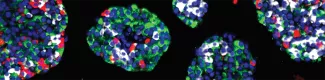
The Komatsu Laboratory pioneers next-generation strategies in regenerative medicine by addressing one of the most fundamental barriers in cell therapy: oxygen limitation. Oxygen availability is a critical determinant of cell survival and function in dense three-dimensional tissues such as pancreatic islets and organoids, yet it remains poorly controlled in conventional culture systems and transplantation settings. Our research aims to quantitatively define and engineer the oxygen microenvironment to overcome this limitation and enable robust, functional cell therapies.
By integrating tissue engineering, transplant biology, and bioengineering, we develop platforms that precisely control oxygen delivery at both the in vitro and in vivo levels. Our work combines experimental approaches with computational modeling to understand how oxygen gradients shape cell fate, and to establish design principles for sustaining viable and functional tissues. These efforts have led to the development of innovative technologies, including oxygen-permeable culture systems, microengineered scaffolds, and implantable oxygen-transporting devices that support high-density cell survival. A central focus of our laboratory is beta cell replacement therapy for type 1 diabetes, using both primary human islets and stem cell-derived islet-like cells. We are particularly interested in improving transplantation outcomes at clinically accessible sites such as the subcutaneous space, which offers advantages in safety and retrievability but is inherently limited in oxygen supply. To address this, we design complementary strategies that enhance graft oxygenation, promote engraftment, and improve long-term function.
Beyond device and platform development, we also investigate fundamental biological variability in hypoxia tolerance across cell types and donors, and establish quantitative metrics to predict graft survival prior to transplantation. This work supports the development of more reliable and reproducible cell therapy approaches.
Ultimately, our goal is to transform how cell and tissue transplantation is performed by creating controllable microenvironments that enable durable, clinically effective therapies. Through multidisciplinary collaboration with engineers, clinicians, and industry partners, we aim to bridge the gap between experimental biology and real-world treatment, advancing curative strategies for diabetes and other diseases requiring cell replacement.